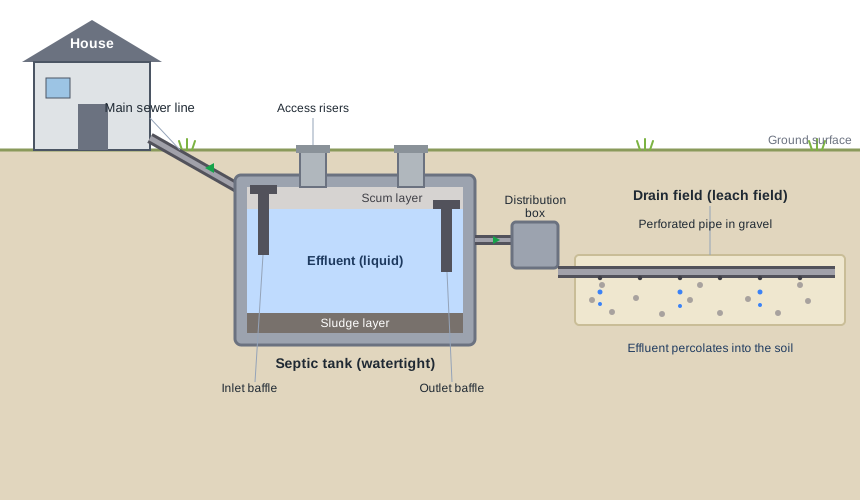
A septic system is a small, self-contained wastewater treatment plant buried in your yard. It works in two stages: first, a watertight septic tank collects everything that goes down your drains and separates it — solids sink, grease floats, and the clarified liquid in the middle flows onward. Second, that liquid (called effluent) travels to a drain field, where it trickles through perforated pipes into gravel and soil, and naturally occurring bacteria finish cleaning it before it rejoins the groundwater. About one in five U.S. homes treats its wastewater this way instead of connecting to a municipal sewer.
Understanding these two stages is the key to everything else about owning a septic system — why you pump the tank, why you protect the drain field, and why the wrong things going down the drain cause problems.
Stage 1: The septic tank separates the waste
Every drain in your house — toilets, sinks, showers, laundry — connects to a single main sewer line that carries wastewater to the septic tank, a buried, watertight box usually made of concrete, fiberglass, or plastic. Inside, the waste separates into three layers:
| Layer | What it is | Where it goes |
|---|---|---|
| Scum (top) | Grease, oils, and lighter-than-water materials | Trapped in the tank by baffles until pumped |
| Effluent (middle) | Clarified liquid — the only layer that should leave | Flows out to the drain field |
| Sludge (bottom) | Heavier solids that settle | Stays in the tank until pumped out |
Inside the tank, naturally occurring anaerobic bacteria — microbes that live without oxygen — begin breaking down the solids, which is why what you send down the drain matters so much. Two baffles (at the inlet and outlet) keep the scum and solids from rushing straight through, and many tanks have an effluent filter at the outlet that catches stray particles before they can reach and clog the drain field.
Crucially, the bacteria only reduce the solids — they don’t eliminate them. Sludge and scum build up over time, which is exactly why the tank must be pumped every three to five years, according to the EPA. Skip it, and the accumulated solids eventually push out into the drain field.
Stage 2: The drain field returns clean water to the soil
The effluent leaving the tank flows to a distribution box, which splits it evenly among several parallel trenches — the drain field (also called the leach field or soil absorption field). Each trench holds a perforated pipe surrounded by gravel. The effluent seeps out through the holes, trickles down through the gravel, and percolates into the soil below.
This is where the final and most important treatment happens. As the liquid moves through the soil, a biological layer and the soil itself filter out remaining bacteria, viruses, and nutrients before the water reaches the groundwater. The drain field is, in effect, a giant natural filter — and it’s the part of the system you most want to protect, because replacing it is the single most expensive septic repair.
That’s why the standard rules exist: don’t drive or park on the drain field (compaction crushes the pipes), don’t plant trees near it (roots invade and clog it), and keep roof and surface runoff directed away from it (extra water saturates the soil so effluent can’t drain).
Why the two stages depend on each other
The tank and the drain field are a team, and the tank’s job is to protect the drain field. When solids are pumped out on schedule, only clean-ish liquid reaches the field and it can last 20 to 30 years or more. When the tank is neglected and overfills, solids escape into the field, clog the soil’s pores, and the field fails — turning a routine pumping (a few hundred dollars) into a replacement that commonly runs into the thousands.
This single relationship explains most septic advice you’ll ever read:
- Pump the tank on schedule → keeps solids out of the field.
- Don’t flush non-degradable items → they don’t break down and fill the tank faster. (See what belongs in the “never flush” list.)
- Go easy on bleach and harsh chemicals → they kill the bacteria doing the work. Here’s how much bleach is actually safe.
- Conserve water → flooding the tank pushes solids out before they can settle.
Types of septic systems (a quick map)
Most homes have a conventional gravity system like the one described above. But soil, lot size, and local rules sometimes require alternatives:
- Conventional / anaerobic: gravity-fed, no power needed. The most common and least expensive.
- Pump / effluent-pump systems: use an electric pump to move effluent uphill or to a distant field; these have a float and alarm and need yearly inspection.
- Aerobic treatment units (ATUs): add oxygen to speed up treatment; used where soil is poor. More effective but more expensive and higher-maintenance.
- Mound systems: build an engineered sand mound above ground where the water table is high or soil is shallow.
If your system has an alarm panel, a pump, or a visible mound, it’s one of the alternative types — and it needs more frequent professional attention than a basic gravity system.
What this means for you as a homeowner
You don’t need to be an engineer, but knowing the two-stage flow tells you exactly where your attention pays off: keep the tank pumped, keep bad stuff out of the drains, and keep weight and roots off the drain field. Do those three things and a septic system quietly works for decades.
A good next step is to learn how to find your septic tank so you can have it inspected and pumped on schedule — the single habit that protects the whole system.