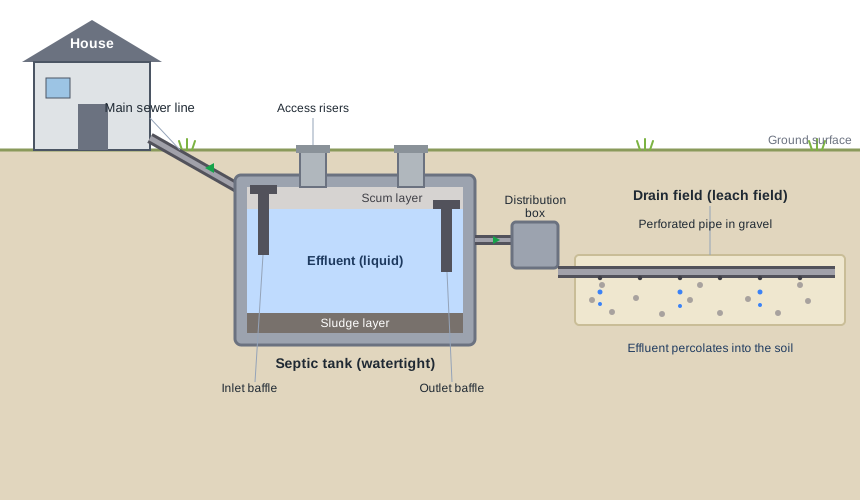
Normal household bleach use is generally safe for a septic system — the problem is volume and concentration, not the occasional use. A septic tank works because billions of bacteria break down solid waste. According to Purdue Extension, if you use bleach “at reasonable levels on a limited basis, the anaerobic microorganisms in a septic tank should be able to recover.” What harms the system is excessive or undiluted bleach — pouring it straight down a drain or using it heavily every day — which “can seriously reduce the bacteria in a septic tank” and, taken far enough, create a “dead” tank that no longer treats waste. So there’s no magic number of cups; the rule is dilute it and don’t overdo it.
A quick, honest note on the “how much” question: you’ll see blogs quote precise limits like “no more than ¾ cup per load, twice a week.” Those numbers are not backed by any EPA or university-extension source — they’re repeated folklore. The defensible guidance is Purdue’s: reasonable, diluted amounts are fine; excessive or undiluted bleach is not.
Why bleach and septic tanks are a touchy subject
Your septic tank is a living system. Anaerobic bacteria digest the solids so that only relatively clear liquid moves out to the drain field. Bleach (sodium hypochlorite) is a disinfectant — its entire job is to kill microorganisms. Send enough of it into the tank and you kill the very bacteria you depend on.
The key word is enough. Dilution changes everything:
- A capful of bleach in a toilet, flushed with gallons of water → heavily diluted by the time it reaches the tank → minimal impact.
- A cup of undiluted bleach poured straight into a drain → hits the tank concentrated → kills bacteria on contact in that zone.
So the honest answer to “is bleach safe?” is: yes, in the amounts a normal household actually uses — and no, if you treat your drains like a place to dispose of cleaning chemicals.
How much bleach is too much?
There’s no single lab number every source agrees on, but the consensus is about volume and concentration over time, not a one-time capful.
| Bleach use | Impact on the tank | Verdict |
|---|---|---|
| Toilet bowl cleaned with bleach, then flushed | Diluted; bacteria recover | Fine in normal use |
| One bleach load of laundry, spread out | Diluted across a wash cycle | Generally fine |
| Multiple bleach laundry loads back-to-back | Concentrated pulse of chlorine | Space them out |
| Continuous bleach tablets in tank/bowl | Steady low-level dosing all day | Avoid |
| Pouring bleach down a drain to “clean” it | Concentrated hit to the tank | Avoid |
| Bleach used as a drain de-clog | High volume, undiluted | Avoid — see safe alternatives |
Rule of thumb: there’s no official cup-per-week number, so go by principle — let bleach arrive diluted in plenty of water, and don’t overdo it with back-to-back heavy loads or undiluted pours. A healthy, regularly pumped tank shrugs off normal use; it’s the concentrated slug that does damage.
Better habits than “no bleach ever”
You don’t have to give up bleach — you have to be sensible about how it reaches the tank.
- Spread out bleach laundry. Don’t run three chlorine-heavy loads in one hour; space them through the week so the tank recovers between them.
- Skip continuous-release toilet products. Drop-in bleach tablets dose your tank with chlorine on every flush, all day. That steady drip is worse for bacteria than an occasional scrub.
- Never pour bleach down a drain to unclog it. Bleach is a poor de-clogger and a great bacteria-killer — exactly backwards for a septic home. Use a drain snake or a septic-safe approach instead.
- Rinse cleaning with water. After bleaching a surface, the rinse water is already dilute — that’s the septic-friendly way it should arrive.
What actually harms a septic system (bleach isn’t the worst)
Homeowners often fixate on bleach while pouring far more damaging things down the drain. The bigger threats to your bacteria and your tank include:
- Chemical drain cleaners (the caustic clog removers) — harsher on bacteria than bleach.
- Antibacterial soaps and cleaners used constantly.
- Solvents, paint, paint thinner, gasoline, and pesticides — never put these in a septic drain.
- Excess medications, especially antibiotics flushed in quantity.
- Grease and non-flushables, which don’t kill bacteria but clog and overload the system.
Keeping these out matters more than sweating a normal bleach-cleaned toilet.
Do you need a “septic treatment” additive to recover?
Marketing pushes additives that promise to “restore” bacteria after cleaning. For a normally used, regularly pumped tank, most guidance says a healthy tank re-establishes its own bacteria from the waste stream and doesn’t need them. If you think you’ve genuinely overloaded the tank with chemicals, the reliable fix is to stop the source and, if problems persist, have the tank inspected — not to pour in a bottle of bacteria and hope.
The bottom line
Bleach and septic tanks coexist fine at household scale. Clean your toilet, run your whites — just don’t turn your drains into a chemical disposal, don’t use continuous-release bleach products, and never bleach your way through a clog. If you’re rethinking what’s safe to send down the drain, the same logic applies to wipes, cleaners, and everything else — and getting it right is what keeps you away from sewer smells backing up into the house and expensive repairs down the line.